
Saks OFF 5TH Packaging Case Study: 100% Recycled, Automated Fulfillment Mailers
How Saks OFF 5TH replaced manual, virgin-plastic polybags with a 100% recycled autobag mailer that runs on its existing automated fulfillment line.
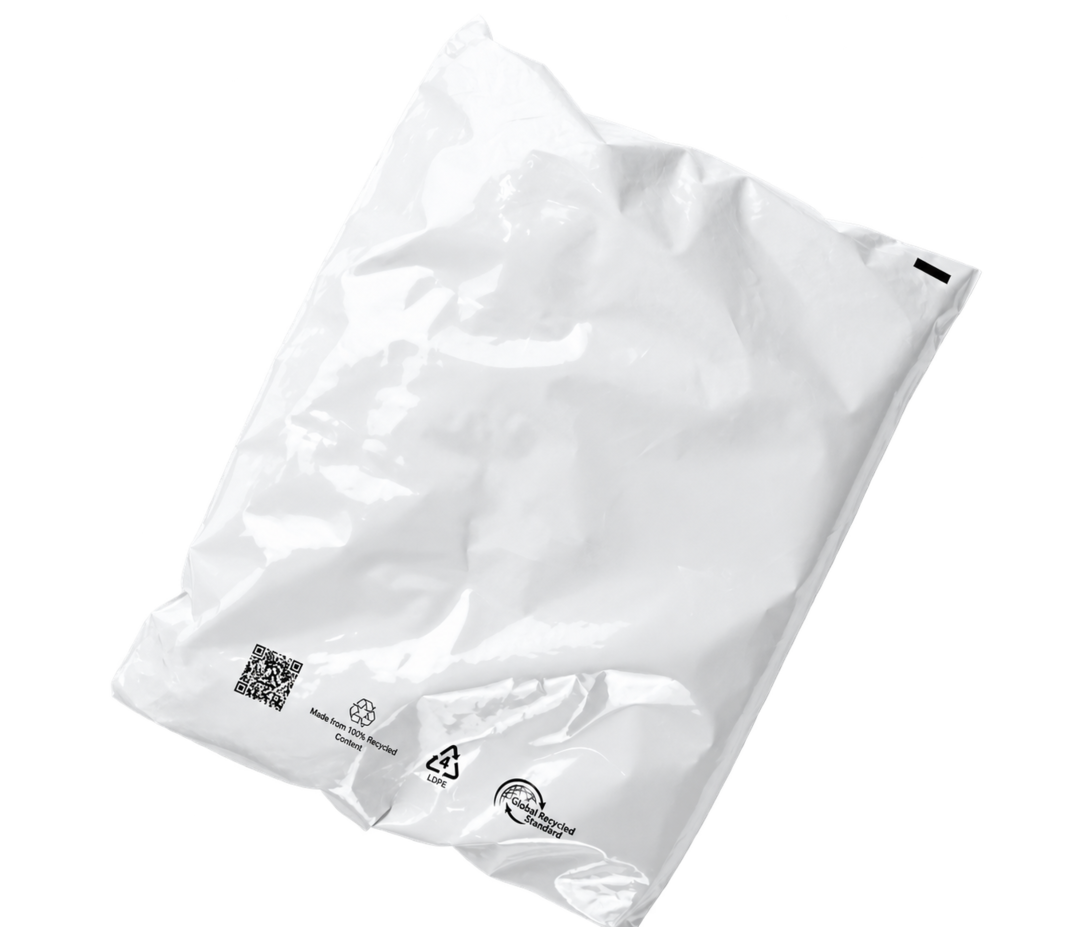
- Client
- Saks OFF 5TH
- Industry
- Off-price retail / e-commerce fulfillment
- Packaging Type
- Automated recycled-content autobag mailer
- Key Materials
- 100% recycled-content D38 polyethylene film, vegetable-based ink
Background
Saks OFF 5TH ships a high, constantly changing volume of apparel and accessories orders. Packaging was historically hand-packed into virgin-plastic polymailers, built for lower volumes with no recycled-material option.
As volume grew, that manual approach became a bottleneck: labor scaled directly with shipping volume, and there was no easy way to cut the plastic footprint. Saks OFF 5TH wanted one change to solve both.
EcoPackables designed a mailer and machine-fed process built for the existing line, swapping virgin plastic for recycled material and giving customers a clear way to recycle the packaging.
The Challenge
Saks OFF 5TH's primary challenges in packaging redesign included:
-
Automate a manual, labor-intensive process
Every polymailer was hand-packed, tying labor hours directly to order volume with no room to scale efficiently as fulfillment grew.
-
Move off virgin plastic without losing performance
The existing polymailers were made from virgin resin. Any replacement film needed to hold seal strength, print quality, and durability while being sourced entirely from recycled content.
-
Integrate cleanly with the existing fulfillment line
A new packaging format that required new equipment or retooling would slow the rollout and add cost. The film had to run on the automated system Saks OFF 5TH already operated.
-
Give customers a real way to recycle the packaging
Recycled-content film is not accepted in curbside bins, so the packaging itself needed to educate customers on how and where to recycle it, not just claim to be recyclable.
The Solution
We partnered with Saks OFF 5TH to develop a comprehensive automated packaging solution that addressed these challenges head-on:
-
100% recycled autobag mailer in proprietary D38 film
EcoPackables specified a roll-fed autobag mailer built entirely from D38 recycled polyethylene film, replacing virgin plastic without changing the bag format Saks OFF 5TH's line was built around.
-
Machine selection and optimization
Automated bagging equipment was evaluated for compatibility with the recycled film, weighing speed, reliability, and environmental performance before committing to a configuration.
-
Trial and customization on the production line
Sample rolls were run on the actual equipment to fine-tune core size, bag perforation, film thickness, and print registration, catching and correcting issues like roll tightness and static charge before full-volume production.
-
QR-code recycling program printed on every bag
Each mailer carries a non-toxic-ink QR code that routes customers to their nearest store drop-off location for film recycling, turning the packaging itself into the recycling instructions.
Before & After
A quick look at what changed in the packaging approach itself.
Before
- Virgin-plastic polymailers, hand-packed order by order
- Labor cost scaled directly with shipping volume
- No built-in customer recycling guidance on the bag
After
- 100% recycled-content D38 film, automated bagging
- Labor decoupled from hand-packing each shipment
- QR code on every bag points to a film recycling drop-off
The Impact
100% Recycled Material
Every mailer now runs on D38 film made entirely from recycled content instead of virgin plastic, cutting millions of virgin-plastic bags out of the supply chain each year.
Automated, Scalable Packing
Recycled film runs on the same automated equipment Saks OFF 5TH already operated, removing manual hand-packing and decoupling labor cost from order volume.
Built-In Customer Recycling
A QR code on every mailer routes customers to their nearest film drop-off point, turning packaging into an active part of Saks OFF 5TH's recycling education.

Switching Saks OFF 5TH's fulfillment mailers to a 100% recycled, automation-ready film removed a long-standing tradeoff: the retailer no longer has to choose between cutting labor costs and cutting virgin plastic. The trial-and-customization process meant the new film could go straight onto existing equipment, and the QR code turns every shipment into a small, direct nudge toward proper recycling.
Why the QR Code Matters: Film Recycling Access in the US
Saks OFF 5TH's exact packaging-level metrics are not yet public; the chart below is a sourced industry benchmark showing why a QR code pointing customers to their nearest drop-off location matters.
Share of US Residents Within Driving Distance of a Film Drop-Off Point
Most recycled polyethylene film, including Saks OFF 5TH's mailers, is not accepted in curbside recycling. It has to go to a store drop-off point instead, which is exactly what each mailer's QR code routes customers to.
| Driving distance | US residents with access to a film drop-off point |
|---|---|
| Within 3 miles | 70.72% |
| Within 10 miles | 92.12% |
| Within 20 miles | 97.86% |
Frequently Asked Questions
What is a 100% recycled autobag mailer, and how is it different from a standard poly mailer?
A 100% recycled autobag mailer is a roll-fed polyethylene shipping bag made entirely from recycled resin instead of virgin plastic, sized and perforated to run on automated bagging equipment. A standard poly mailer is usually made from virgin film and packed by hand. The recycled version delivers the same durability and print quality while cutting virgin plastic use and, in Saks OFF 5TH's case, running through the same automated line without retooling.
Can automated packaging lines run on 100% recycled film without slowing down fulfillment?
Yes, when the film specifications are matched to the equipment. Recycled resin can behave differently from virgin plastic in thickness consistency, roll tightness, and static charge, so trial rolls are tested on the actual machine before full production. Once core size, perforation, and tension are dialed in, recycled film runs at the same automated speed as virgin film.
How does recycled polyethylene film compare to virgin plastic mailers in performance?
Properly specified recycled PE film matches virgin film on tear resistance, seal strength, and print clarity for e-commerce shipping. The main differences show up earlier in development: recycled resin needs more careful thickness and static-charge testing to avoid roll tightness issues, which is why a trial-and-customization phase matters before switching a full fulfillment line over.
Why put a QR code on recycled shipping mailers?
Most recycled polyethylene film is not accepted in curbside recycling and instead needs to go to a store drop-off point for PE film. A QR code printed directly on the mailer, in non-toxic ink, links each customer to their nearest drop-off location, removing the guesswork that causes recyclable film to end up in the trash instead of back in the recycling stream.
What does it take to switch a high-volume retailer's fulfillment packaging to recycled materials?
It typically starts with a machine and material compatibility review, followed by sample rolls run on the actual production line to catch issues like roll tightness, static charge, or seal quality. Specifications (film thickness, core size, perforation, print registration) are adjusted based on those trials, then validated at full volume before a full production changeover.
Are recycled poly mailers curbside recyclable, or do they need store drop-off?
Almost all polyethylene film mailers, recycled content or not, are not accepted in curbside bins because they jam sorting equipment. They need to go to a store drop-off collection point for PE film, commonly available at large grocery and retail stores. As of 2025, roughly 71% of US residents live within a 3-mile drive of one, per the Sustainable Packaging Coalition.
How can retailers cut both labor costs and plastic use in fulfillment packaging at the same time?
Automating the bagging step and switching to recycled-content film address different costs at once: automation reduces the labor hours spent hand-packing each order, while recycled resin reduces virgin plastic purchasing and supports sustainability commitments. Neither requires sacrificing the other when the film is engineered to run on the same automated equipment.
What should retailers look for when sourcing recycled-content mailers?
Confirm the actual recycled content percentage (not just "recyclable"), ask for machine-compatibility data if you run automated equipment, and check that the film has been trial-tested for your specific bagging system rather than sold as a generic drop-in replacement. Also confirm whether the film is store drop-off only or has broader curbside acceptance in your market.
Ready to Automate and Rightsize Your Fulfillment Packaging?
Talk to our team about a recycled-content film built to run on your existing packaging line.
More Sustainable Packaging Case Studies
See how other brands partnered with EcoPackables on rightsized, sustainable packaging.